
Live training • Registration closes may 28, 2026 (CENTRAL)
LIVE TRAINING • EARLY-BIRD ENDS MAY 15 (CENTRAL)
Save $20 before May 15 • Code: GAC26
EMDR CONTINUING EDUCATION TRAINING
EMDR Affirming Care for 2SLGBTQIA+ Clients: From Research to Practice & Interventions
Standard EMDR protocols don't account for how discrimination, minority stress, and identity-based harm show up in memory networks, clinical presentation, and the therapeutic relationship.
Learn to apply the Minority Stress Model within the EMDR framework — with practical strategies for affirming assessment, AIP-informed case conceptualization, and phase-by-phase interventions for identity-based trauma.
A live, intermediate to advanced-level EMDR continuing education training for licensed mental health professionals
with
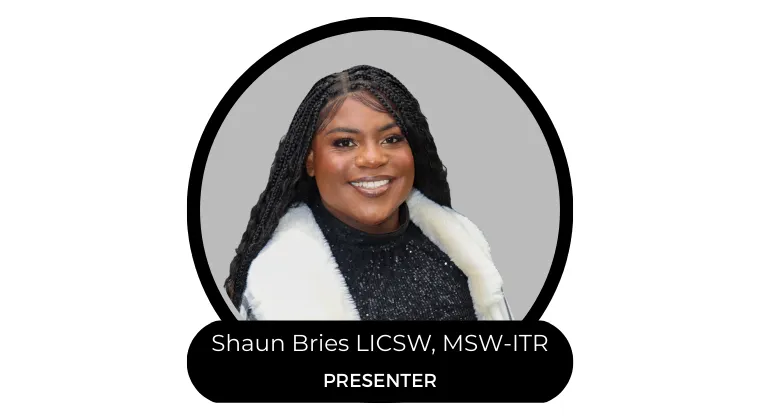
Shaun / Sienna Bries LICSW, MSW-ITR
EMDR Certified Clinician | EMDRIA Approved Consultant In Training (CIT)
MAY 29, 2026 · Live Virtual
EMDR Basic Training Required
Live training · 90-day replay access
Secure checkout · Instant confirmation • Zoom link in your account • CE Certificate issued upon attendance verification
PRICING
Registration closes May 28, 2026 (central)
Live training with 90-day replay access
Secure your seat before registration closes
Live training · 90-day replay access
Secure checkout · Instant confirmation • Zoom link in your account • CE Certificate issued upon attendance verification
SAVE WITH EARLY BIRD PRICING
Early Bird ends May 15, 2026 (central) · Registration closes May 28, 2026 (central)
Live only - replay available for 90 days.
Early-bird pricing expires in:
Live training · 90-day replay access
Secure checkout · Instant confirmation • Zoom link in your account • CE Certificate issued upon attendance verification
WHO SHOULD ATTEND
This intermediate to advanced-level EMDR continuing education training is designed for licensed mental health professionals who have completed EMDR Basic Training and want to strengthen their clinical work with gender-expansive / 2SLGBTQIA+ clients.
It is especially relevant for therapists, counselors, social workers, psychologists, and marriage and family therapists working in trauma-focused settings.
Please note: The morning session is open to all licensed clinicians. The afternoon session assumes completion of EMDR Basic Training and is not designed for clinicians without that foundation.
COURSE OVERVIEW
Translate current research on minority stress and identity-based trauma into practical, EMDR-informed clinical care for 2SLGBTQIA+ clients.
This training uses the Minority Stress Model as a clinical framework within EMDR's Adaptive Information Processing (AIP) model to help clinicians understand how discrimination, identity-based trauma, and systemic harm shape memory networks, presenting concerns, and therapeutic engagement for 2SLGBTQIA+ clients. Rather than treating affirming care as an add-on, the course integrates culturally responsive and identity-affirming principles into EMDR case conceptualization, assessment, preparation, and reprocessing across all eight phases.
The Minority Stress Model as a clinical lens within AIP-informed case conceptualization
Inclusive assessment and documentation practices for 2SLGBTQIA+ clients
Identity-based trauma recognition in negative cognitions, body sensations, and relational patterns
Affirming interventions across the eight phases of EMDR therapy
The training combines lecture, clinical case examples, experiential exercises, and guided discussion to move from conceptual understanding to applied clinical strategy.
WHAT YOU'LL LEARN
After this training, clinicians will be better prepared to:
Understand how minority stress, discrimination, and identity-based trauma shape memory networks, clinical presentation, and therapeutic engagement for 2SLGBTQIA+ clients.
Conduct more inclusive, culturally responsive assessment and history-taking that accounts for minority stress, barriers to care, and identity-based harm.
Recognize how identity-based trauma may appear in negative cognitions, body sensations, presenting concerns, and relational patterns.
Strengthen preparation and resourcing with affirming, stabilization-focused interventions before trauma processing begins.
Apply the Minority Stress Model within EMDR case conceptualization to target experiences of discrimination, internalized stigma, and identity-based harm.
Support installation and integration of adaptive beliefs related to self-worth, agency, belonging, and authentic identity across the eight phases of EMDR therapy.
TAKE THIS INTO YOUR NEXT SESSION
The strategies in this training — from affirming assessment and inclusive documentation to AIP-informed case conceptualization — are designed to be applied in clinical work right away, starting with your next client session.
Live training · 90-day replay access
Secure checkout · Instant confirmation • Zoom link in your account • CE Certificate issued upon attendance verification
HOW THIS CHANGES YOUR CLINICAL WORK
This training deepens how clinicians recognize and respond to identity-based trauma within the EMDR framework — from case conceptualization through reprocessing. Participants will leave with a broader lens for understanding how minority stress and systemic experiences shape memory networks, and greater confidence applying affirming interventions when identity-based harm emerges in clinical work.
This is not an add-on technique — affirming care becomes part of how clinicians understand memory networks, client experiences, and therapeutic attunement.
MEET YOUR PRESENTER
Shaun / Sienna Bries LICSW, MSW-ITR
EMDR Certified Clinician | EMDRIA Approved Consultant In Training (CIT)
Shaun / Sienna Bries is a Licensed Independent Clinical Social Worker and EMDRIA Certified Clinician practicing in Massachusetts, where they provide individual, family, and group therapy for adolescents and adults. A two-spirited clinician, Shaun/Sienna earned their Master of Social Work in Indigenous Trauma and Resiliency from the University of Toronto and brings both clinical expertise and lived experience to their work with 2SLGBTQIA+ communities. Their research focus on decolonizing trauma work informs the lens they bring to this training.
Train with an EMDRIA-Certified Clinician/CIT who specializes in 2SLGBTQIA+ Affirming Care
COURSE DETAILS
- DATE:
- May 29, 2026
- TIME:
- 9AM (CST) / 7AM (PST) / 8AM (MST) / 10AM (EST)
- FORMAT:
- Live Virtual
- LOCATION:
- Zoom link (found in your account)
- REGISTRATION:
- Join 15 minutes early
- REPLAY ACCESS:
- 90-day access to the raw event recording (on-demand version released separately)
- EMDRIA CREDITS:
- 6 (under review)
- CE CREDITS:
- 6 (under review)
- LEVEL:
- Intermediate to Advanced
- PREREQUISITES:
- EMDR Basic Training Required
- PRICE:
- $249.99
Still have questions? You’re learning from experienced EMDR trainer—scroll to meet them.
COURSE AGENDA
This agenda reflects a balance of lecture, experiential practice, and clinical integration.
- 8:45–9:00 AM Registration & Networking
- 9:00–10:00 AM Welcome & Overview
- 10:00–11:00 AM Practice
- 11:00–11:15 AM Break
- 11:15 AM–12:00 PM Lecture
- 12:00–1:00 PM Lunch
- 1:00–2:00 PM Lecture & Practice
- 2:00–2:15 PM Break
- 2:15–3:00 PM Lecture & Practice
- 3:00–3:45 PM Lecture & Activity
- 3:45–4:00 PM Questions & Wrap Up
COMMON QUESTIONS
Is this training appropriate if I recently completed EMDR Basic Training?
Yes. If you've completed an EMDRIA-approved Basic Training, this course is designed for you. It builds on the standard eight-phase protocol by deepening your ability to apply EMDR with 2SLGBTQIA+ clients — including affirming assessment, identity-informed case conceptualization, and culturally responsive interventions across all phases.
Do I need prior experience working with 2SLGBTQIA+ clients?
No prior specialization is required. This training is designed for EMDR-trained clinicians at any level of experience with this population. The morning session covers foundational concepts accessible to all licensed clinicians, and the afternoon session applies those concepts within the EMDR framework for those who have completed Basic Training.
What is the Minority Stress Model, and do I need to know it beforehand?
The Minority Stress Model is a research-based framework that explains how experiences of discrimination, stigma, and marginalization contribute to health disparities in sexual and gender minority populations. You do not need prior knowledge of the model — the training introduces it and shows how to apply it within EMDR's Adaptive Information Processing (AIP) framework for case conceptualization and treatment planning.
Will this training change how I use standard EMDR protocol?
This training does not replace or modify the standard eight-phase EMDR protocol. It deepens how you apply the protocol by helping you recognize how minority stress and identity-based trauma show up in memory networks, negative cognitions, and therapeutic engagement — so your existing EMDR skills become more attuned and responsive to 2SLGBTQIA+ client experiences.
Is this training experiential?
Yes. The training combines lecture, clinical case examples, experiential exercises, and guided discussion. You'll have opportunities to practice applying concepts — not just learn about them.
Will a recording be available?
Yes. Registrants receive 90-day access to the event recording after the live training. To receive EMDRIA or CE credits, participants must attend the live virtual training in full and meet completion requirements. An on-demand version is typically released separately 20–30 days after the live event.
Do I receive EMDRIA-approved CE credits?
EMDR & Beyond is an EMDRIA-approved provider of continuing education. This course has been submitted for 6 EMDRIA credits, currently under review. Licensed mental health professionals who attend the full live training and meet completion requirements will receive continuing education credits consistent with EMDRIA standards once approved. CE credit count will be confirmed prior to the training date.
Is this training APA-approved?
EMDR & Beyond is approved by the American Psychological Association to sponsor continuing education for psychologists. This course has been submitted for 6 APA credits, currently under review. Credit count will be confirmed prior to the training date.
Accreditation & Compliance Information
EMDRIA CREDITS: 6 (under review)
APA CREDITS: 6 (under review)
Accreditation Learning Objectives (EMDRIA Compliance)
By the end of this training, participants will be able to:
* Explain the Minority Stress Model and its relevance to clinical conceptualization and care for sexual and gender minority clients
* Critically assess the impact of heteronormative assumptions, provider bias, and limited research frameworks on 2SLGBTQIA+ client access to affirming care.
* Demonstrate culturally responsive, AIP informed assessment strategies, including inclusive documentation and communication practices that reflect diverse identities.
* Implement EMDR interventions targeting distressing beliefs rooted in discrimination, internalized stigma, and identity-based trauma.
* Describe common negative cognitions and belief systems associated with minority stress and marginalization in 2SLGBTQIA+ populations.
* Develop strategies to foster resilience through affirming resourcing & reprocessing outcomes in 2SLGBTQIA+ clients using evidence-informed EMDR interventions.
Continuing Education & Credit Information
EMDR & Beyond is the provider of continuing education (CE) credits for this program.
EMDR & Beyond is approved by the American Psychological Association (APA) to sponsor continuing education for psychologists. EMDR & Beyond maintains responsibility for this program and its content.
This training is intended for doctorate- and master’s-level mental health professionals, including Psychologists, LMFTs, LMHCs, LPCs, LISWs, LMSWs, and other master’s-level practitioners who have successfully completed an EMDR Basic Training.
Licensed professionals are responsible for contacting their regulatory board to determine individual course approval.
EMDRIA Credit Information
EMDR & Beyond is an EMDRIA-approved EC Provider (#15007). This program (#15007-xxx) is approved for 6 EMDRIA Credits. Eligibility for EMDRIA credits is limited to participants who have completed an EMDRIA-approved Basic EMDR Training.
Certificate & Attendance Requirements
Certificates are issued electronically after attendance verification and completion requirements are met.
To receive CE or EMDRIA credits for live in-person or live virtual attendance, participants must attend the entire program in real time. Partial credit is not available, and viewing a recording does not qualify for live credit.
For the on-demand version (typically available 20–30 days after the live event), participants must complete the full curriculum and pass a post-quiz with a minimum score of 75%.
Certificates are automatically released once the quiz is successfully completed.
Course Evaluation & Support
Completion of the course evaluation is encouraged but not required to receive CE or EMDRIA credits. Participants who prefer not to complete the evaluation may contact Kenya Rocha at [email protected] to request certificate release.
For assistance with the learning platform, CE or EMDRIA credit attainment, or accommodation requests, please contact Kenya Rocha at [email protected].
RESERVE YOUR SEAT
May 29, 2026 · Live Virtual
Live training · 90-day replay access
Secure checkout · Instant confirmation • Zoom link in your account • CE Certificate issued upon attendance verification
Grievance Policy
EMDR & Beyond is committed to equitable treatment of all participants and to resolving grievances in a fair and timely manner. Written grievances should be submitted to Kenya Rocha at [email protected]. Grievances will be reviewed and, when appropriate, corrective action will be taken to prevent future occurrences.
Cancellation Policy
Refunds are available within three (3) days of course purchase, less a $50 processing fee. Purchases made after this period are non-refundable.
Conflict of Interest Policy
There is no known commercial interest or conflict of interest related to this workshop.
ADA Compliance
This course complies with the Americans with Disabilities Act (ADA). Participants requiring special accommodations should contact Kenya Rocha at [email protected] in advance.